Why Is My Ring Not Notifying Me of Motion? 12 Essential Fixes for Your Doorbell
Introduction
You bought a Ring doorbell so you can see who is at your door and get motion alerts when someone walks up. When those motion notifications stop, the doorbell loses most of its value and, more importantly, your home feels less secure.
If you find yourself asking, ‘Why is my Ring not notifying me of motion?’ you are not alone. Many homeowners run into this issue after a phone update, a router change, or a tweak in the Ring app they do not remember making. The good news: in most cases, the doorbell itself is fine. The problem usually lies in settings, Wi‑Fi, or phone notifications, and all of those are within your control.
This guide walks you through practical, step‑by‑step fixes. You will learn how motion alerts should work, how to find where the breakdown happens, and how to restore reliable Ring motion notifications without wasting time guessing in the app.
To fix the problem efficiently, you first need to understand how motion detection and motion alerts are meant to work when everything is configured correctly.
How Ring Motion Alerts Are Supposed to Work
Understanding the basics helps you pinpoint where things go wrong. When you know what ‘normal’ looks like, you can see where your setup differs and focus your effort.
Motion Detection vs. Motion Alerts: What Is the Difference?
Ring doorbells have two related but separate functions:
- Motion detection: The device senses movement in front of the camera and decides whether to create an event.
- Motion alerts: The Ring app sends a push notification to your phone about that motion event.
Your Ring can detect and record motion without sending you a notification if alerts are disabled or filtered. So when you ask, ‘Why is my Ring not notifying me of motion?’, you first need to check whether the device is still detecting motion at all.
How Your Ring Doorbell Sends Notifications to Your Phone
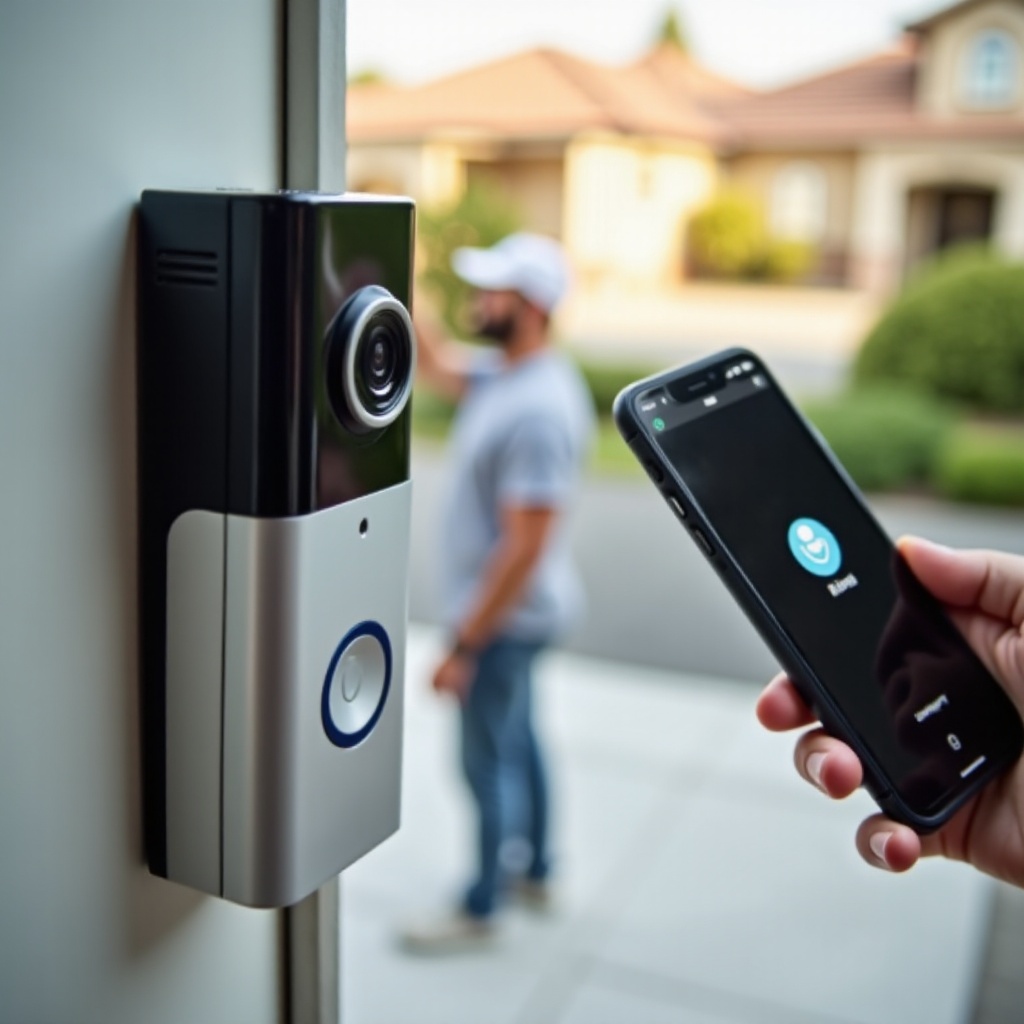
When someone walks up to your door:
- The Ring doorbell’s motion sensor detects movement.
- The device sends data through your Wi‑Fi to Ring’s servers.
- Ring processes that event and pushes a notification to your phone.
- Your phone’s operating system (iOS or Android) decides whether to show that notification, based on your settings.
If any part of this chain breaks, such as weak Wi‑Fi, disabled app notifications, strict battery saver, or misconfigured motion settings, you may never see the alert even though motion occurs.
Checking Event History to See If Motion Is Being Recorded
Before changing settings, check if your Ring still records motion:
- Open the Ring app.
- Go to the Dashboard and tap History or Event History.
- Filter for Motion events.
If you see motion recordings that match when someone was at your door, the camera is detecting motion. Your issue is likely notifications or phone settings. If you see no motion events at all, the problem lies with motion detection itself, not just alerts.
Once you know which part is failing, it makes sense to start with the most common cause: your phone’s notification settings.
Step 1 – Rule Out Simple Phone Notification Issues
Many users discover that nothing is wrong with the Ring doorbell. Their phone simply is not allowing Ring notifications to reach the screen.
Make Sure Ring Notifications Are Enabled in iOS or Android
On iPhone:
- Go to Settings > Notifications > Ring.
- Make sure Allow Notifications is turned on.
- Enable Lock Screen, Notification Center, and Banners.
- Turn on Sounds if you want an audible alert.
On Android (menus vary by brand):
- Go to Settings > Apps > Ring > Notifications.
- Turn on Allow notifications.
- Enable all relevant channels, especially Motion Alerts and Doorbell Alerts.
If notifications are disabled at this level, your Ring can send alerts, but your phone will silently ignore them.
Turn Off Focus, Do Not Disturb, and System Quiet Modes
Focus modes and Do Not Disturb can silently block your notifications:
- On iPhone, check Settings > Focus. Turn off active Focus profiles or allow the Ring app as an exception.
- On Android, look for Do Not Disturb under Sound & vibration or Notifications. Disable it or add Ring as an allowed app during DND.
Also check for:
- ‘Bedtime’ or ‘Sleep’ modes.
- Digital Wellbeing or parental control profiles that mute notifications.
Verify Banner, Sound, and Lock‑Screen Alert Settings
Even if notifications are ‘allowed’, you may not see them if visual and sound options are off:
- Enable an appropriate banner style on iPhone.
- Allow pop‑up or heads‑up notifications on Android.
- Turn on sound so you hear the alert when the phone is nearby.
After you adjust these, trigger a test motion event and see if you get an alert. If you still do not see notifications, the next step is to confirm that motion detection and motion alerts are actually enabled inside the Ring app.
Step 2 – Confirm Motion Detection and Motion Alerts in the Ring App
Now that your phone can show notifications, you need to ensure the Ring app itself is configured to send them when motion occurs.
Where to Find Motion Detection and Motion Alerts Toggles
- Open the Ring app.
- Tap your doorbell device.
- Tap the Motion Settings or Motion Detection menu.
Look for two important toggles:
- Motion Detection: controls whether the doorbell detects and records motion.
- Motion Alerts: controls whether the app sends notifications when motion is detected.
Both must be turned on. If Motion Detection is off, the device will not trigger at all. If Motion Alerts is off, you will see recordings in history but get no notification.
Testing Motion with a Quick Walk Past Your Doorbell
After enabling these settings:
- Close the app.
- Walk in front of your doorbell within its usual detection range.
- Wait a few seconds and check whether:
- A motion event appears in Event History.
- A push notification appears on your phone.
This quick check tells you whether the basic detection and alert functions are working again or if some other feature still silences motion alerts.
Differences Between Motion Alerts and Ring Press Alerts
Remember that button presses and motion events use separate settings:
- Ring alerts (button press) are usually under Device Settings > General Settings or a similar menu.
- Motion alerts are under Motion Settings.
You might still get a notification when someone presses the doorbell button, even if motion alerts are disabled. If button alerts work but motion alerts do not, you know the issue is specifically in motion settings, not general notifications.
If settings look right and you still do not receive motion alerts when you should, the next logical place to look is at features that intentionally mute motion, such as modes, schedules, and motion snooze.
Step 3 – Check Modes, Motion Schedules, and Snooze
Ring includes features that intentionally silence motion alerts at certain times or in certain modes. These are useful when you manage them, but they cause confusion when they are set and forgotten.
How Home, Away, and Disarmed Modes Affect Motion Alerts
Modes let you control device behavior based on whether you are home or away:
- Disarmed: Often disables motion detection or alerts on some devices.
- Home: May allow inside cameras to be off but keep doorbells active.
- Away: Usually enables most motion detection and alerts.
To check how modes affect your doorbell:
- Open the Ring app.
- Tap the Mode icon if you use modes.
- Open Mode Settings and view the rules for your doorbell in each mode.
If your doorbell is set to Disarmed and motion alerts are disabled in that mode, you will not get motion notifications until you change the rule or switch to a different mode.
Finding and Editing Motion Schedules That Silence Alerts
Motion schedules let you mute notifications at certain times, such as when kids play in the yard every afternoon:
- In the Ring app, go to your doorbell.
- Tap Motion Settings.
- Look for Motion Schedule.
If you see a schedule, check:
- Days of the week.
- Start and end times.
Delete the schedule or adjust it if it is muting alerts when you actually want to receive them.
Canceling Motion Snooze So Alerts Start Again
Motion snooze temporarily silences alerts for a short period:
- On the dashboard, look for a small snooze or bell icon.
- Tap it to see if motion snooze is active.
- Cancel or adjust the snooze timer.
Once you clear modes, schedules, and snooze, motion alerts should be active again. If you still miss notifications, your motion zones and sensitivity might not cover the areas where people walk, so it is time to refine how the doorbell sees your front entry.
Step 4 – Adjust Motion Zones, Distance, and Sensitivity
If your Ring doorbell is not detecting the right motion, it may never trigger an alert. Fine‑tuning zones and sensitivity ensures you capture real visitors without overwhelming yourself with false alarms.
Creating Effective Motion Zones for Walkways and Porches
In Motion Settings:
- Open Edit Motion Zones (name can vary by model).
- Use the on‑screen grid to outline areas where people normally approach, such as:
- Walkways
- Driveways
- Front steps
- Avoid including:
- Busy streets
- Sidewalks far from your door
- Areas with constant car traffic
If your current zones do not cover the path people use, the doorbell will not detect them and cannot send any motion alerts.
Increasing Sensitivity Without Getting Too Many False Alerts
Most Ring doorbells have a motion sensitivity slider:
- Increase sensitivity if you miss people walking up.
- Decrease sensitivity if you get alerts for distant cars, shadows, or moving trees.
Adjust gradually:
- Move the slider a bit higher.
- Walk test in front of the door.
- Repeat until it consistently captures people without constant false alarms.
Using Smart Alerts to Filter People, Packages, and Other Motion
Smart alerts can filter which types of motion trigger notifications:
- People
- Packages
- General motion (cars, animals, and other movement)
If you only enable people alerts, the app may filter out some events that do not look like people. In Motion Settings > Smart Alerts (or similar):
- Check which categories are enabled.
- Consider allowing both people and other motion while you troubleshoot.
- After everything works, you can tighten filters again to reduce noise.
Once zones, sensitivity, and smart filters are tuned, you should get motion events reliably in your history. If events still seem delayed or missing, the next likely cause is your network connection.
Step 5 – Inspect Wi‑Fi Connection and Device Health
Weak Wi‑Fi or frequent network drops can stop motion alerts before they ever reach your phone, even if everything else is set correctly.
Checking RSSI and Device Health in the Ring App
RSSI (signal strength) shows how strong your doorbell’s connection is to your router:
- In the Ring app, open your doorbell.
- Tap Device Health.
- Look for Signal Strength (RSSI).
As a general guideline:
- Values closer to 0 are better.
- High negative numbers (for example, -80 or -90) indicate a poor connection.
You may also see frequent ‘offline’ messages in Device Health if the doorbell loses Wi‑Fi often.
Fixing Weak Signals with Better Router Placement or Extenders
To improve Wi‑Fi and stabilise motion alerts:
- Move your router closer to the front door, if possible.
- Raise the router off the floor and away from thick walls, metal, and large appliances.
- Use a Wi‑Fi extender, mesh system, or Ring Chime Pro near the doorbell.
After changes, reboot the router and doorbell, then run another test by walking in front of the camera and watching for alerts.
Recognizing When Network Drops Cause Missed Motion Alerts
Network problems often show specific signs:
- Motion events appear in history late or in bursts.
- Live View fails to connect or loads very slowly.
- The device frequently switches between online and offline.
If this describes your situation, stabilising Wi‑Fi is essential before you blame the hardware. If your connection looks strong and stable, then power and battery health are the next pieces to examine.
Step 6 – Check Power, Battery Level, and Wiring
Low power can reduce performance, cause random reboots, or stop the device from working reliably, which in turn affects motion alerts.
Low Battery Symptoms and How They Affect Motion Alerts
For battery‑powered Ring doorbells:
- Check the battery level in Device Health.
- If it is low (under roughly 20%), charge or swap the battery.
Low battery can:
- Delay or drop motion recordings.
- Make the device go offline unexpectedly.
- Cause the doorbell to miss events entirely.
Hardwired vs. Battery‑Powered Ring Doorbells
Some Ring doorbells:
- Run purely on battery.
- Are battery devices with optional hardwiring to trickle charge.
- Are fully wired (no removable battery at all).
If you thought your device is fully hardwired but it still shows low battery, the wiring might not supply enough power. In that case, it may simply operate as a battery device that is not charging properly.
Basic Wiring and Transformer Checks for Wired Models
For wired models:
- Make sure the breaker that feeds the doorbell circuit is on.
- Confirm wires are firmly connected at the doorbell and at the chime.
- If you are comfortable or have help, check transformer voltage (often 16–24V) using a multimeter, or have an electrician do it.
If power looks fine and Wi‑Fi is stable, but motion notifications still behave oddly, it is wise to look at the Ring app itself and rule out glitches or outdated software.
Step 7 – Update or Reinstall the Ring App
App bugs and outdated versions can cause strange notification behaviour, especially after phone system updates or changes to permissions.
Confirming You Have the Latest Ring App Version
On iOS:
- Open the App Store.
- Search for Ring.
- Tap Update if the button appears.
On Android:
- Open the Google Play Store.
- Search for Ring.
- Tap Update if available.
New versions often fix notification and compatibility issues that lead to missing alerts.
Clearing Cache or Reinstalling to Fix Glitches
If the app is already up to date:
- On Android, clear cache via Settings > Apps > Ring > Storage > Clear cache.
- On both platforms, uninstall and reinstall the Ring app.
Then sign back in and re‑enable notifications when prompted. Reinstalling forces the app to rebuild its files and can clear hidden bugs.
Signing Out and Back In to Refresh Account Permissions
If you prefer not to reinstall:
- Open the Ring app.
- Go to the menu and open your Account or profile.
- Sign out, then sign back in.
This can refresh tokens and permissions that sometimes block notifications. If the app behaves correctly but alerts still fail, your motion configuration might need a full reset.
Step 8 – Reset and Rebuild Motion Settings
If you have tried minor tweaks and nothing works, starting fresh with motion settings often clears hidden misconfigurations.
Restoring Motion Zones and Sensitivity to Default
In Motion Settings:
- Look for an option to Restore Defaults or Reset Motion Settings.
- Confirm the reset.
This clears custom zones and sensitivity levels that may be overly restrictive or badly tuned.
Creating New Zones from Scratch for Better Coverage
After resetting:
- Open Edit Motion Zones.
- Draw a simple, broad zone covering:
- The walkway
- The front steps
- The area directly in front of the door
- Set sensitivity to medium or slightly above at first.
Avoid complex shapes and aggressive filters until you confirm alerts work the way you expect.
Doing a Controlled Walk‑Through Test After Changes
Test your new setup:
- Make sure your phone is unlocked and the Ring app is allowed to send alerts.
- Walk toward the door from different angles and distances.
- Check whether:
- Motion events appear in Event History.
- Notifications reach your phone quickly.
If motion events still fail or are delayed, even with default settings and strong Wi‑Fi, you may need a deeper reset on the device itself.
Step 9 – When to Factory Reset Your Ring Doorbell
A factory reset can clear persistent glitches but requires you to run through the full setup again. Treat this as a more advanced step once simpler fixes fail.
Situations Where a Factory Reset Makes Sense
Consider a factory reset if:
- The device repeatedly goes offline while other devices stay connected.
- Motion events do not show in history despite good Wi‑Fi and power.
- Multiple phones and app reinstalls still do not receive alerts.
How to Perform a Reset on Popular Ring Doorbell Models
Exact steps vary by model, but typically you will:
- Find the small setup button on the device (often on the side or back).
- Hold it for about 15–20 seconds until the light flashes.
- Release the button and wait for the doorbell to reboot.
Then, in the Ring app:
- Tap Set Up a Device.
- Select Doorbells.
- Follow the on‑screen instructions to connect to Wi‑Fi and complete setup.
Setting the Device Up Again as a New Doorbell
During setup:
- Recreate motion zones and other motion settings.
- Re‑enable notifications and confirm permissions on your phone.
- Add Shared Users again if you had others on the account.
If a factory reset does not solve the issue, the problem could be related to your account or to how multiple devices access the doorbell.
Step 10 – Shared Users, Multiple Devices, and Account Issues
Some households have several phones linked to the same Ring doorbell. Differences between owners and Shared Users can explain why one person gets alerts and another does not.
How Shared User Notification Settings Differ from the Owner’s
- The device owner controls most core settings, such as motion zones and modes.
- Shared Users can enable or disable notifications on their own phones.
If a Shared User says, ‘Why is my Ring not notifying me of motion?’ while the owner gets alerts, that user’s phone or app settings are likely the issue, not the Ring device or account as a whole.
Troubleshooting When One Phone Gets Alerts and Another Does Not
If one phone gets motion alerts and another does not:
- Compare notification settings inside the Ring app on both phones.
- Check phone‑level notification and Do Not Disturb settings on the problem phone.
- Ensure both phones use the latest Ring app version.
This side‑by‑side comparison quickly reveals what differs, whether it is an app toggle, a Focus mode, or an operating system permission.
Removing and Re‑Adding a Device to Your Account
As a last resort for account‑level issues:
- The owner can remove the doorbell from their account and then set it up again.
- Shared Users can be removed and re‑invited to refresh their access.
Sometimes a clean account link resolves hidden configuration issues that survive other resets. If you still do not receive motion alerts after all these steps, it is reasonable to involve Ring support or a professional.
When to Contact Ring Support or a Professional
Most notification problems come down to settings, Wi‑Fi, or power, but some issues point to deeper hardware or account problems that need expert help.
Signs of Possible Hardware or Sensor Failure
Hardware may be failing if:
- The motion sensor never triggers, even during deliberate walk tests.
- The doorbell behaves inconsistently despite strong Wi‑Fi and proper power.
- You notice physical damage, cracks, corrosion, or signs of water inside the device.
Information and Screenshots That Help Support Diagnose Issues
Before contacting Ring Support:
- Take screenshots of Device Health, RSSI, and Motion Settings.
- Note the times when motion should have triggered but did not.
- Write down what you have already tried (resets, app reinstall, moving the router, and so on).
This information helps support avoid repeating steps and speeds up diagnosis so you can get back to reliable motion alerts faster.
Warranty, Replacement, and Professional Installation Options
Depending on your purchase date and plan:
- Your doorbell may still be under warranty.
- Certain Ring Protect plans include extended coverage and additional support.
- A professional installer or electrician can check wiring and transformer issues for wired models.
If support confirms a hardware fault, they may offer repair or replacement options, and a professional can help ensure your power and network setup suits your Ring device.
Conclusion
When you ask, ‘Why is my Ring not notifying me of motion?’, the solution is almost always in one of a few places: phone notifications, Ring app settings, Wi‑Fi, power, or, in rare cases, hardware. By moving step by step from checking event history and phone settings to reviewing motion zones, modes, Wi‑Fi, and power, you can identify where the chain breaks and fix it.
The key is to test after each change. Walk in front of your Ring doorbell, check event history, and watch for notifications on your phone. Once you restore reliable alerts, revisit Smart Alerts and motion zones to balance strong security with fewer false alarms.
With the right setup, your Ring doorbell becomes what you bought it for: a dependable first line of awareness whenever someone approaches your home, giving you peace of mind every time motion occurs at your front door.
Frequently Asked Questions
Why does my Ring record motion but not send me a notification?
If your Ring records motion but does not notify you, motion detection works, but alerts are blocked. The most common causes are Motion Alerts toggled off in the Ring app, phone notifications disabled for Ring, or modes, motion schedules, or motion snooze configured to silence alerts at certain times. Check Motion Settings to ensure Motion Alerts are on, confirm notification permissions on your phone, and look for active schedules or snooze timers.
Why did my Ring motion notifications suddenly stop working in 2024?
Sudden failures often follow a change, such as a phone update that reset notification permissions, a Ring app update that altered motion settings or modes, or a new router or Wi‑Fi change that weakened your doorbell’s connection. Review your phone’s notification settings, confirm Motion Alerts are on in the Ring app, and check Wi‑Fi signal strength in Device Health. If needed, reinstall the Ring app and sign in again so it can request fresh permissions.
How do I test if my Ring motion alerts are working correctly after changes?
To test your setup, first open the Ring app and confirm Motion Detection and Motion Alerts are both on. Make sure your phone is unlocked and not in Do Not Disturb or Focus mode. Then walk toward your door in a few different paths and distances. Watch for motion events to appear in Event History and for push notifications to reach your phone quickly. If events appear but notifications do not, revisit your phone’s notification and Focus settings. If neither events nor notifications appear, adjust motion zones and sensitivity, then test again.